EcoStain
With EcoStain, we are making qualitative histological research ready for a sustainable future. From the plant residual stream of red cabbage, we are developing an environmentally and user-friendly alternative to current synthetic histochemical dyes. For this purpose, naturally occurring pigments from the non-consumable leaves of red cabbage are optimally extracted and implemented in a validated staining protocol for histological material.
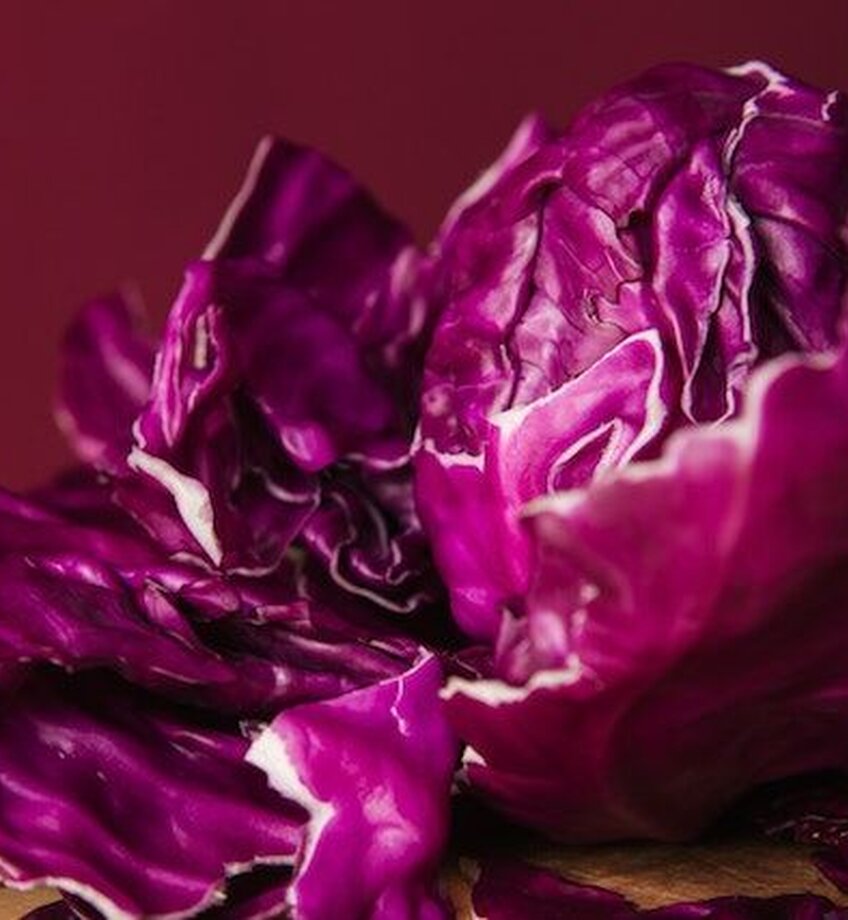
Anthocyanins from plant residues as an ecological alternative to histochemical staining
The intent of this project is to develop a local, biological and circular alternative to Hematoxylin-Eosin Staining (HE staining), a histological staining technique that to date has been the standard in the microscopic examination of human and animal tissue.
HE staining combines the use of two dyes. On the one hand, hematoxylin, a dye extracted from wood chips of the Central American tree species Haematoxylum campechianum or Campêche tree. On the other hand, the synthetic dye eosin Y, a chemical derivative of fluorescein formed by bromination.
An ecological alternative to these dyes was found in anthocyanin, a dye found in red cabbage, among others. The dye can be relatively easily extracted from the outer, non-consumable leaves of red cabbage supplied by a local agricultural cooperative. The adequacy of the extract obtained as a dye for histological material was already established experimentally during an experimental research phase in preparation for this project.
However, before anthocyanin staining can offer a scientifically and circular-economically mature alternative as a standard histological staining technique, several essential steps still need to be taken, such as there are:
- Scaling up the supply of the plant residual stream: maximizing collection of non-consumable red cabbage leaves from organic farm 't Schaaphof in Landegem and expanding partnerships with other local organic farms;
- Optimization of the extraction process: research on limiting the alcohol percentage of the extraction product with the aim of achieving a maximum balance between yield and biodegradability of the extraction product, in partnership with BIT-O (PBa Chemistry of Odisee);
- Validation of the staining process: comparative quality study of anthocyanin staining with current HE staining in partnership with AZ Sint-Lucas in Ghent;
- Economic feasibility study: investigation of economic feasibility of the alternative color protocol in partnership with CenSE (PBa Business Administration of Odisee)
Past activities
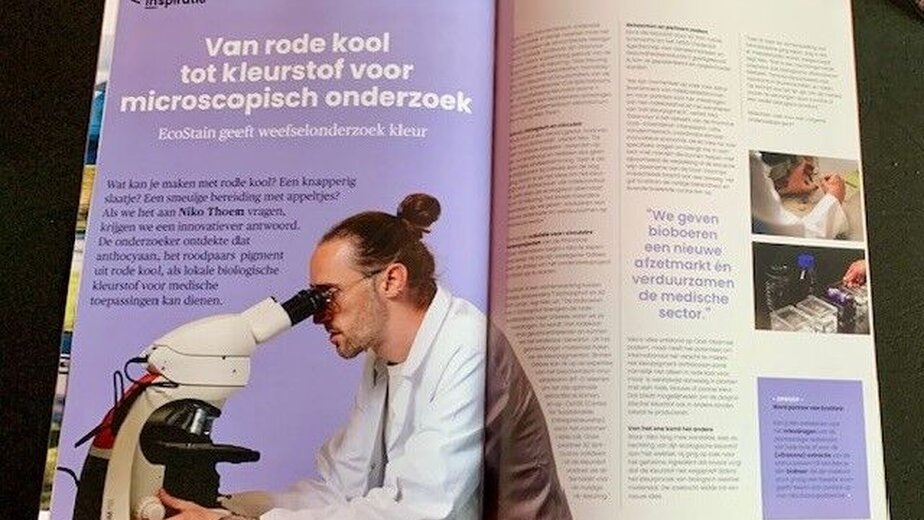
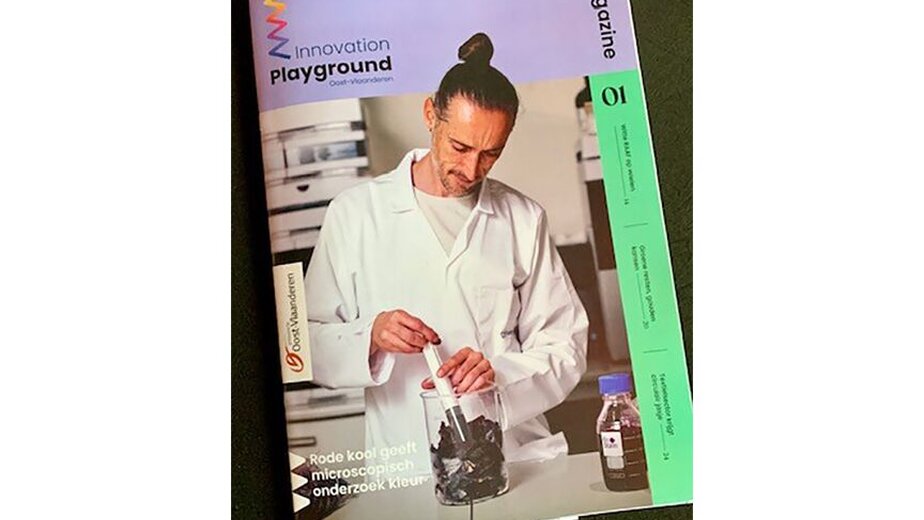
November 2024: article in magazine of Province of East Flanders (From red cabbage to dye for microscopic research: EcoStain gives tissue research color)
26/11/2024: EcoStain present at experience market of Festival of the Future (Festival of the Future)
21/03/2024: Opening event Labo Medical Analysis. (Odisee Technology Campus Ghent)
15/03/2024: BioBeo Science Festival (BioBeo Festival)
29/02/2024: Science Battle 2024
26/11/2023 Day of Science (Odisee - EcoStain: coloring with coal! - On Location - Day of Science)
14/11/2023 First steering committee meeting
03/10/2023 | beLEEF day EcoStain. Red cabbage becomes medical innovation: visit biofarm & lunch
On Tuesday, October 3, during the East Flanders Impact Week 2023, we organized a beLEEFdag together with the biofarm 't Schaaphof. A day where sustainability, circularity, gastronomy and of course EcoStain were central. Here you could experience together with us the treasures the organic farm has to offer for body and mind and discover where the EcoStain story begins....
Innovation Playground Magazine Province of East Flanders
During the Festival of the Future on Nov. 26, 2024, the very first edition of the Innovation Playground Magazine was released. EcoStain is featured on the cover and there is also a fine article about the project in the magazine.
Meet the researchers

Our partners
- 't Schaaphof, Biological C(ommunity) S(upported) A(griculture) Cooperative Society
- AZ Sint-Lucas Ghent, Laboratory for anatomy and pathology
- Province of East Flanders